Discourse 155 – Does Jewish wisdom save you from hell?
The legacy of the Gaon of Vilna and its lessons for our time.
The Mosaic background.
The Christian promise.
The legacy of the Gaon of Vilna and its lessons for our time.
(Texts in a black frame are quotations from visitors to this site or from other
authors.)
(The legacy of the Gaon of Vilna and its lessons for our time. / by Rachel
Avraham 00, 2022-01-25)

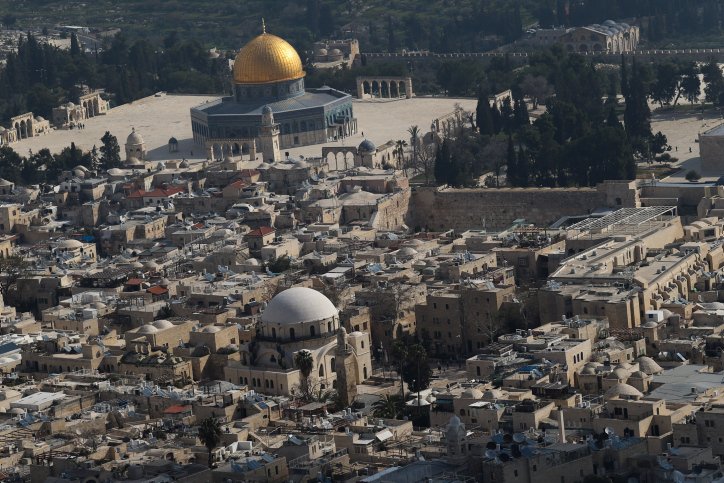
Photo: Nati Shohat/Flash90
The Gaon of Vilna, or ‘the Sage of Vilna,’ was one of the greatest Jewish scholars since Maimonides.
Born Elijah Ben Solomon Zalman (1720-1797), he once said something that is of great importance to us today. "The most
important protection is seclusion, that, God forbid, one should not leave the house unless one is in very great distress.
And even in the synagogue, one should be very brief and go quickly. It is better to pray at home, because in the
synagogue it is impossible to save oneself from envy and vain talk and gossip."
In these difficult times, I have found great wisdom in the Gaon of Vilna’s idea of seclusion, for the only way to preserve our sanity in times like these
is to retire to study and use our isolation to expand our knowledge of the world around us by reading books, learning a
new language, writing books and articles, and deepening our knowledge of human history and the Jewish faith.
Of course, the Gaon of Vilna did not believe in seclusion for the same reason we distance ourselves socially today. There
was no corona in those days. For him, it was a way of life, because being a hermit allowed him to be more productive in
his study of Torah.
Professor Maov Kahana of the Department of Jewish History at Tel Aviv University explained in
an exclusive interview with Israel Today that the Gaon of Vilna had the following opinion: "A wise person does not take
responsibility for the community. He retires to a small monastery. He did not become a rabbi of a yeshiva. He prefers to
be in touch with all the Torah, the mitzvot and the halacha, to keep them in his head. That was his project, to retire
to a room and not be in contact with anyone."
In Eliyahu’s Branches by Chaim Friedman, Yehuda Leib and Avraham, both sons of the Gaon of Vilna, agree with Kahana’s statements
about the Gaon of Vilna that when he studied, he hardly slept for days: "He researched, corrected texts and compositions on Bible, Mishnah, Babylonian Gemarah, Yerushalmi Gemarah, Toseftah, Mechilta, Safra, Sifri, Seder Avot De Rabbi Natan. On Massoret and Grammar he wrote more than a hundred principles. On
algebra and trigonometry there are a number of manuscripts. His knowledge was engraved on his lips and in his heart and
he knew all the opinions of the rabbis and scholars. He did not waste his time in idleness, for we saw that even when he
spoke to us, he was brief and to the point."
Although the Gaon of Vilna refused to run a yeshiva, he established a private group known as the ‘gloitz of the Gaon’, which "studied in a room belonging to him. There were a small number of privileged scholars who studied with the Gaon and absorbed his teachings. Through the teachings of these students and the yeshivot they founded, the Gaon’s influence shaped the life of Lithuanian Jewry."
Professor Kahana noted that he did not teach the ‘gloitz of the Gaon’, but that they absorbed his ideas: "This is the ideal scholarship for generations. The deeper meaning of our thoughts is powerful. Making a change is not just the result of public opinion.
If you want to try something new, you should value your thoughts and insights about every part of the Torah. Somehow,
the intrinsic value he conveyed was spread throughout the Jewish world and changed it in many ways," even though none of
his manuscripts were published during his lifetime.
According to Professor Kahana, the whole idea that the world was created only to study Torah was founded by the Gaon of Vilna: "The Jewish nation was to revolve around a deeper understanding of Torah. The Gaon of Vilna supported secular studies because many secular studies can lead to a full understanding of the Torah. For this reason, he supported the study of mathematics, physics, music, medicine, etc."
"He had a relationship with the Land of Israel, which prompted his students to come to Israel in the first decades
of the 19th century," Professor Kahana said. "They came to Safed and Jerusalem and established new Ashkenazi communities
in Israel. They founded the Hurva Synagogue, a famous house of worship in the Jewish quarter of Jerusalem. The Purashim,
the disciples of the Gaon community, still own it today. It was founded by the righteous scholars when they made aliyah
in the early 19th century."
Some claim that the Gaon of Vilna was an early proponent of political Zionism: "The Rivlin family, who were students of the Gaon and made aliyah, claim that ‘Kol Hator’ comes from the Gaon’s writings. In this book, the Gaon propagates the idea that one must actually strive for redemption by making aliyah, as propagated by Zionism. Many scholars tend to think that the Rivlin family authored these writings and that the Gaon never thought this way." Professor Kahana noted that this work has greatly influenced the Religious Zionist movement to this day.
The God Who Is There.
The Gaon of Vilna’s introduction to the Book of Esther is particularly relevant to our time
because the story of Purim occurred when the Jewish people were in exile and facing physical destruction. God was hidden
from their presence, just as God is hidden from our presence now. In the story, the Gaon of Vilna relates that there was
once a king who had a son, but the son committed some serious offenses, so he was banished to a forest.
"The king’s son concluded that his father had abandoned him and forgotten him," writes the Gaon of Vilna. "But this was not so. Rather, the father was very worried about his son and feared that the wild animals in the forest or the ministers
who hated his son would try to attack him. So the king sent his servants into the forest to watch over his son. However,
the king instructed his servants to make sure his son didn’t notice their presence, so the son would still feel like he
was atoning for sins against his father." As it turned out, these servants saved the son in the forest on countless
occasions.
The Gaon of Vilna explains that just like the king’s son in the forest, "all our narrow escapes from
day to day, as well as all our joys and blessings, come from our Father in heaven, who always sends his angels to
protect, nourish and guide us." Thus, even in these dark times, we can cling to the Torah for spiritual guidance and
know that God has not abandoned us, even though we may not feel His presence at that moment.
Israel Today | Topics: Jewish Wisdom, Vilna Gaon
The Mosaic background.
Christianity – at least biblical Christianity – derives from the Mosaic faith of the people of
Israel. Their and our God repeatedly transmitted prophecies to Israel through the prophets of the Old Testament about
the behavior of his people and reminded them of the commandments which he once entrusted to Moses. Among them was one of
the most important commandments of the Mosaic faith, the belief in "ONE God".
At that point in time, when the Mosaic faith arose, this belief in only one God was an unmistakable and unique selling point. In all other religions of
this world, people had invented "gods" at their own convenience, which they then also represented in many ways
figuratively as wood or stone carvings. For each area of life people invented another god – the weather god, the god of
love, the god of victory in war and so on. And if they needed victory in war, love or beautiful weather, they prayed to
these "gods" and, of course, made suitable sacrifices to them.
Besides all these dead idols made of wood, stone or metal or represented in pictures, there is however one –
and only one! – really and truly living and acting God. And this one and only God commanded the Israelites through his prophets:
Hear, O Israel: The Lord our God, the Lord is one.
(5Mo 6,4)
שְׁמַע יִשְׂרָאֵל יְהוָה אֱלֹהֵינוּ יְהוָה אֶחָד
schəma jisrael adonai elohenu adonai echad (sephardic)
schəma jisroëil adaunoi elauhëinu adaunoi echod (askenazic)
This is the "Shma Yisrael", named after the opening words of this section of the Torah
(Deut. 6,4-9), which can be called the Jewish confession of faith par excellence. It is familiar to Jews and Gentiles
alike. It is preached to the believing Jew daily, almost hourly, from childhood on: The Eternal is our God (Elohim)
alone.
And then, two thousand years ago, a young Jew from Nazareth comes along claiming to be the Son of God. He
himself did not demand to be worshipped, but – and this is the curse of any "religion" in this world: everything
connected with the "God" (idol) of a religion is automatically worshipped and venerated. Even the bones of deceased
idols, even their pieces of clothing and objects associated with them (such as drinking cups for instance), are
worshipped and kissed by the faithful as relics, regardless of whether or not this is doctrinally required.
And
this brings us to the critical point: the Jews failed to grasp what this statement "the ETERNAL is one and only one"
really means. It does not only mean that there is only one God in this world, it also means that this
God is unique in this world – because he is not of this world. Our God, in fact, is an
"extraterrestrial". As his Son, our Lord Jesus Christ, explained to His disciples back then:
"God is spirit, and his worshippers must worship in the Spirit and in truth."
(Jn 4,23-24;)
But even the disciples of Jesus did not understand this at that time. If you try to understand
it, however, suddenly all misunderstandings are resolved – not only those of the past, in fact, but also ones continuing
into our own modern, technicized, digitalized time, where the quanta do what they want and not what the physicists would
like to dictate to them on grounds of physical principle.
So if you honestly try to understand this point, you can see it even in the Old Testament. The Son of God tells us in this connection:
Mt 6, 5 And when you pray, do not be like the hypocrites, for they love
to pray standing in the assemblies (Catholic masses) and on the street corners
(or in front of the Catholic idol altars ["Mary" and the death cult of the "saints"] and the Jewish "Wailing Wall"! /
FH), to be seen by others. Truly I tell you, they have received their reward in full. Mt 6,5;
So, the worldly Christians worship their idols in front of the altars, and the Jews worship a
wall. None of them have understood that the one and only God – the only God deserving to be worshipped – cannot be found
there. God can be worshipped only where God, who is spirit, can also be found: in the spirit of people.
The explanation of this in the Old Testament:
Deut 4,15 You saw no form of any kind the day the Lord spoke to you at Horeb out of the fire. Therefore
watch yourselves very carefully,
4,16 so that you do not become corrupt and make for yourselves an idol, an
image of any shape, whether formed like a man or a woman. Deut 4,15-16;
|
Here, in Deuteronomy (the 5th Book of Moses), God Himself warns the Israelites not to worship and adore
Him in an earthly – material – image. When God once spoke to them out of the fire in the desert on Mount Horeb, they saw
nothing. No figure, no image, not even an object – only the fire. So, no one saw God, and therefore no one can say what
God looks like or try to reproduce him.
And therefore we know of God only – and this is what the Jews think as
well – that God is "one". Therefore, the Jews also say: "Where there is ONE, there cannot be two. There cannot be two
gods and therefore there is also no Son of God, because he would inevitably have to be also God". But here the Catholics
feel obliged to defend the divinity of the Son of God and their own "Trinity", and interpret these words: "the ETERNAL
is one!" in such a way that it is supposed to mean: God is the ONLY one who may be called "the ETERNAL". In that they
are not exactly wrong either.
The Jewish scribes at the time of Jesus – and not only they – consciously or
unconsciously did not scrutinize this statement of the prophets which constituted the instructions of their God. Those
passages in their Torah, like the above passage from Deut 4:15-16, they evidently interpreted only in part. They
understood the prohibition of images and passed it on to the people, but not the implicit reasoning behind it – because
there actually is no "image".
This would not have been necessary if they had actually believed. Because then the
spirit of God would have pointed it out to them in their spirit, and they would have understood it. But they too did not
seek the glory of God, but rather their own glory, and therefore they did not understand the words of God that there was
"no form at all" in the fire at that time: so if there was no visible, material form at all and it still spoke, then it
must have been of an invisible, spiritual nature.
If you are a true believer, you trust these words of God. If
you have the intellectual ability, then trust comes at the beginning: you don't understand it at first, but you trust
that it is right, if these are God's words. And then the search begins and you find the solution. If you don't have
these intellectual gifts, then trust is at the end: you don't understand it, but you trust that it is right in its own
way.
This is because faith means nothing other than trust. Faith is trust and whoever actually believes – whether
they are intelligent or not so intelligent – will also trust and either understand and pass it on(!), or not understand
and simply believe.
The Jewish scribes failed at that time, as the whole world knows today. It was a fiasco on
the part of the Jewish clerical hierarchy. Not because they were not intelligent enough, but because they were corrupt.
It was a case of quite obvious corruption, fraud and murder, as the evangelist Matthew tells us:
But the chief priests and the elders persuaded the crowd to ask for Barabbas and to have Jesus executed.
Mt 27,11 Meanwhile Jesus stood before the governor, and the governor asked him,
‘Are you the king of the Jews?’ ‘‘You have said so,’ Jesus replied.
27,12 When he was accused by the chief priests and the elders, he gave no answer. 27,13 Then Pilate asked him,
‘Don’t you hear the testimony they are bringing against you?’ 27,14 But Jesus made
no reply, not even to a single charge – to the great amazement of the governor. 27,15 Now it was the governor’s custom
at the festival to release a prisoner chosen by the crowd. 27,16 At that time they had a well-known prisoner whose name
was Jesus Barabbas. 27,17 So when the crowd had gathered, Pilate asked them, ‘Which one do you want me to release to
you: Jesus Barabbas, or Jesus who is called the Messiah?’
27,18 For he knew it was out of self-interest that they had handed Jesus over to him. 27,19 While
Pilate was sitting on the judge’s seat, his wife sent him this message: ‘Don’t have anything to do with that innocent
man, for I have suffered a great deal today in a dream because of him.’ 27,20 But the chief priests and the
elders persuaded the crowd to ask for Barabbas and to have Jesus executed.
|
27,21 ‘Which of the two do you want me to release to you?’ asked the governor. ‘Barabbas,’ they
answered. 27,22 ‘What shall I do, then, with Jesus who is called the Messiah?’ Pilate asked. They all answered, ‘Crucify
him!’ 27,23 ‘Why? What crime has he committed?’ asked Pilate. But they shouted all the louder, ‘Crucify him!’
27,24 When Pilate saw that he was getting nowhere, but that instead an uproar was starting, he took water and
washed his hands in front of the crowd. ‘I am innocent of this man’s blood,’ he said. ‘It is your responsibility!’ 27,25
All the people answered, ‘His blood is on us and on our children!’ 27,26 Then he released Barabbas to them. But he had
Jesus flogged, and handed him over to be crucified. Mt 27,11-26;
So, as we read in verse 18, Pilate knew that the religious leaders of Israel, the high priest Caiaphas
and the councilors in the Sanhedrin, delivered the Son of God to the cross out of self-interest. These murderers had
realized that if Jesus really came to rule, they would no longer be religious (and also political!!) leaders of Israel and all their glory and
honor would be gone.
In verse 20 we then also read, logically enough, that it was the high priest and his
councilors who persuaded the crowd to release the criminal Barabbas and to kill the Son of God. And when Pilate, who saw
the real state of affairs and was well aware of Jesus' complete innocence, tried to bring the Jewish people to their
senses, they only roared all the louder and confirmed their resolve by cursing themselves:
"Crucify him!… His blood is on us and on our children!"
(Mt 27,23-25;)
This curse laid by the Israelite people on themselves two thousand years ago, was to become, in later
times, the sad reality of the Diaspora and the Holocaust. But in the latter case, Nazis cannot be absolved of guilt any
more than Jews can be absolved of murdering the Son of God by "saving the world".
The overwhelming majority of today's Jews are religionless (all Jews are God-less for since two thousand years,
except for those who converted to Jesus Christ!). And the few Israelis of the Mosaic faith insult their Messiah today,
just as his murderers did two thousand years ago, as a "blasphemer and deceiver".

(Real Jew News)
The Christian promise
So much for the not very promising background of the Mosaic faith. But what about Christianity, what can
orthodox Christians expect?
Therefore, there is now no condemnation for those who are in Christ Jesus.
Rom 8,1 Therefore, there is now no condemnation for those who are in
Christ Jesus, 8,2 because through Christ Jesus the law of the Spirit who gives life has set you free
from the law of sin and death. 8,3 For what the law was powerless to do because it was weakened by the flesh,
God did by sending his own Son in the likeness of sinful flesh to be a sin offering. And so he condemned sin in the
flesh,8,4 in order that the righteous requirement of the law might be fully met in us, who do not live
according to the flesh but according to the Spirit. Rom 8,1-4;
Paul then names those people for whom there is no condemnation. And almost as an aside, he also explains
why God gave the commandments. He does not emphasize this in particular because this connection was a matter of course
for the Jews, who had diligently studied their Torah.
For the Christians, however, who left the study of the
Bible - not without Catholic tutoring (Bible ban) - to the Catholic and other "clergy", the biblical commandments were
used as "cane sticks" to intimidate the church people and to obtain money for the forgiveness of sins by the
"reverends".
The commandments of God - the Law of Moses - do not demand that people be obedient or humble by
keeping them. The law demands that man be RIGHTEOUS! The commandments were given by God "that the righteousness which
the law demands may be fulfilled in us". And if we now summarize Paul's thoughts above, he makes the following
statements:
The law of the flesh is called "fulfilling" the commandments and leads to death through the
sinful (incapable) flesh.
The law of the Spirit is called "believing" in Christ Jesus and makes one alive in the
Spirit
The law (the commandments) therefore demands righteousness, that man be righteous in all that
he does and leaves. The first attempt to entrust this obligation to man was not successful because man was too weak
(sinful) in his flesh. That is why God had mercy and sent his Son, who resisted sin in that very flesh and brought
salvation to mankind.
For those people who seek God, however, this means that the commandments alone are not the
solution; this is a dead end in which all Mosaic Jews and many believers in worldly Christianity are stuck. You have to
come to faith in Jesus Christ - and only in Jesus Christ, without "Mary", the "saints" or other idols in this world.
This is especially important for people who want to convert, as the Catholic Church with its lying dogmas and false
teachings lures people onto the wrong track.